Dubsado Workflows: Simple vs. Complicated Setups
This Is Where People Make Life Complicated
Let’s talk about Dubsado workflows because this is where people make life complicated.
And listen, I say that with love.
Dubsado workflows can be as simple or as detailed as you want them to be.
You can have a three-step workflow.
You can have a twelve-step workflow.
You can have a fifteen-step workflow.
You can even take one full client journey and break it into several smaller workflows.
The 12-Step Workflow Example
For example, let’s say your full client process has twelve steps from inquiry to onboarding.
Some people may take that twelve-step workflow and split it into three separate workflows.
Workflow number one may only handle the inquiry stage.
That could include:
Inquiry form received
Confirmation email sent
Pricing guide sent
Book-a-call invitation sent
The reason they may do this is because not every inquiry becomes a client.
So if someone does not make it past the inquiry stage, they do not need to see the proposal, agreement, invoice, onboarding questionnaire, welcome guide, or any of the next steps.
That is the vetting part of the process.
When Smaller Workflows Make Sense
Then, if the person is a good fit and moves forward, they may enter workflow number two.
That workflow may include:
Proposal
Agreement
Invoice
Retainer payment
Onboarding questionnaire
Then workflow number three may handle what happens after booking.
That could include:
Welcome guide
Kickoff details
Service reminders
Thank-you email
Feedback questionnaire
Review request
Now, is that wrong?
No.
For some businesses, breaking a workflow into smaller sections makes sense.
It can help keep things organized.
It can help separate inquiries from booked clients.
It can help you control when someone moves into the next stage.
Where Entrepreneurs Get Overwhelmed
But if you are new to Dubsado, this can also make everything feel way more complicated.
Because now you are not just building one workflow.
You are building three workflows.
You have to understand where one ends.
You have to understand where the next one begins.
You have to understand what triggers the next workflow.
You have to know what is automatic, what needs manual approval, and what happens if someone does not move forward.
That is where a lot of entrepreneurs get overwhelmed.
They start with a simple client journey, but then the setup turns into this big complicated system before they even understand the basics.
Start With the Full Journey First
If your brain works better seeing all twelve steps from start to finish, start there.
There is nothing wrong with mapping out the full journey in one place.
You can always make it more advanced later.
The goal is not to build the most complicated workflow.
The goal is to build a workflow that supports your actual client experience.
What Your Workflow Needs to Answer
You should know:
What is being sent
When it is being sent
Who it is being sent to
Whether it is automatic or manual
What happens if the client does not move forward
That is why your client journey map matters so much.
It gives your workflow structure.
Without the map, you are just clicking around and hoping something makes sense.
Clarity Comes Before Complexity
With the map, you can decide whether your business needs one full workflow or several smaller workflows.
For many entrepreneurs, a simple setup is more than enough to start.
You can always build in more complexity later, but clarity needs to come first.
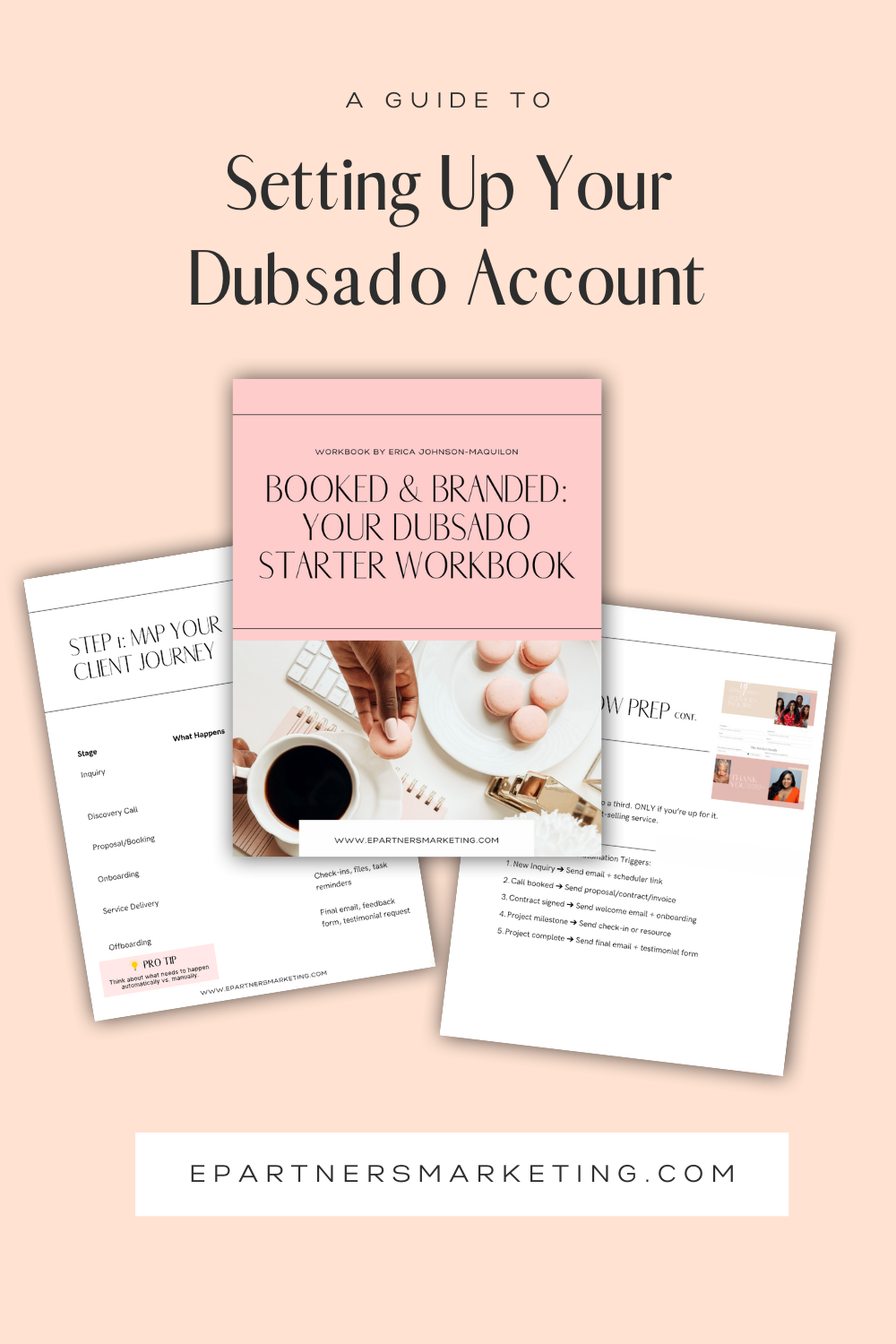
Want to map this out with me? Grab the Dubsado workbook and walk through your client journey, forms, emails, and setup steps one piece at a time.
Already know you need help setting this up? Book a Dubsado setup or branding onboarding call and we’ll make your client experience feel way less chaotic.